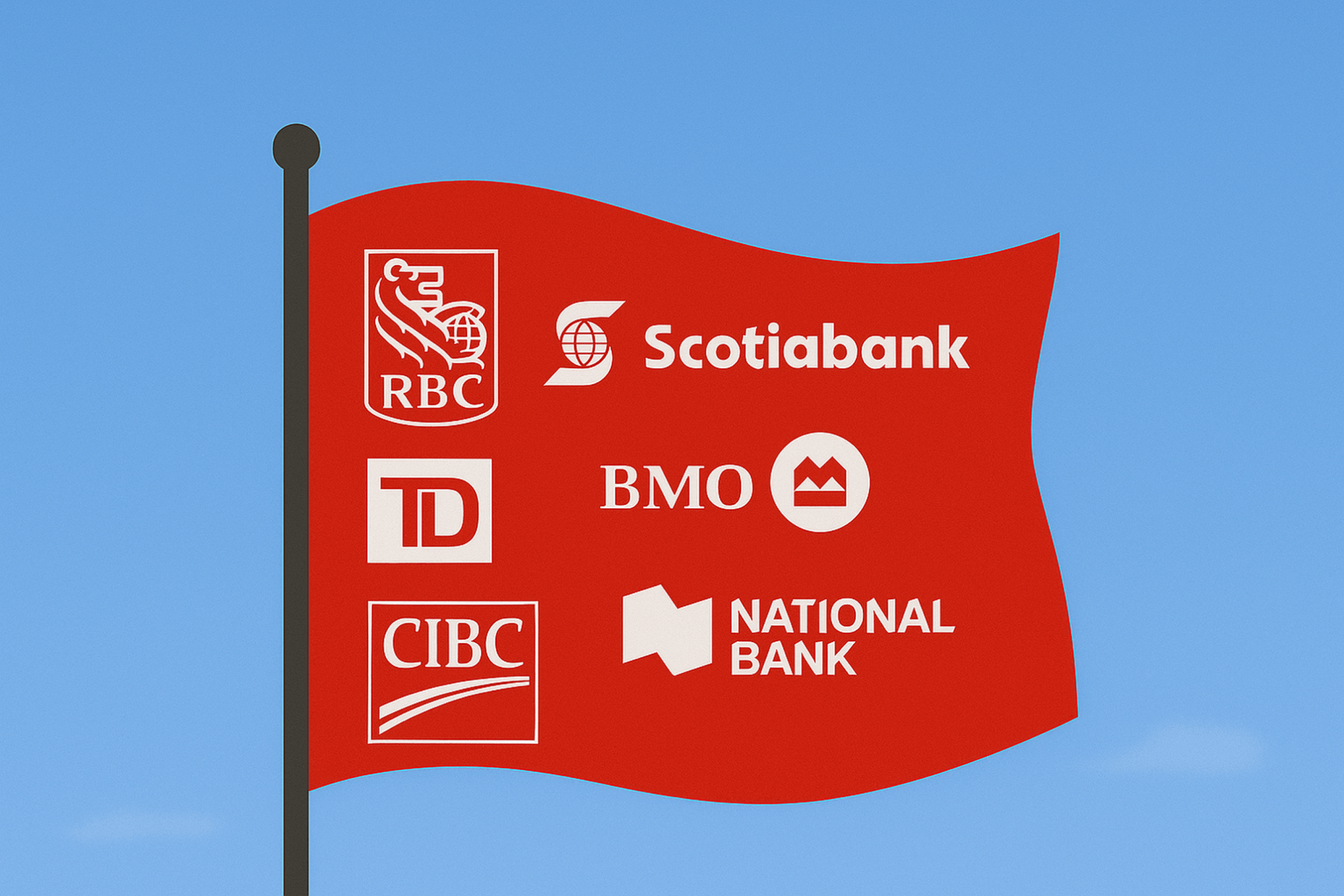
The Hidden Risk in Canadian Bank Brokerages:
How “Bought Deals” Can End Up in Your Investment Account Without You Realizing
When most people invest through a bank-owned brokerage in Canada, they assume their money is safe and professionally managed. After all, these are household names—Canada’s biggest banks, with decades of experience and reputations for security and trust.
But behind the scenes, a less-publicized practice is quietly putting many investors at risk: The dumping of small, volatile stocks into client portfolios—often as part of what’s known as a Bought Deal.
We recently uncovered this first-hand when reviewing a client’s investment account. What we found was alarming.
The Client Statement That Raised Red Flags
A long-time investor approached us to review their portfolio. As we looked through their statement, we noticed something strange: their account was filled with a variety of small-cap stocks—many of them obscure, highly volatile, and totally unsuitable based on any client’s profile.
Curious, we dug deeper. We searched news releases and financial filings related to these small-cap companies and discovered a pattern: in nearly every case, the bank-owned brokerage had participated in a Bought Deal financing with the company just before the stock appeared in our client’s portfolio.
This wasn’t a coincidence. It was a systemic practice.
What Is a “Bought Deal”?
A Bought Deal is a type of financing transaction where a brokerage (often a bank’s investment arm) agrees to buy a block of shares directly from a company—usually a small or mid-sized firm looking to raise capital. The brokerage then sells these shares to investors, ideally at a slight profit.
In theory, there’s nothing wrong with this. It can be a legitimate way for companies to raise money and for brokerages to serve their clients. But in practice, when conflicts of interest aren’t properly managed, things can get murky.
How Clients Get Caught in the Crossfire
Here’s the troubling part: in many cases, these Bought Deal shares don’t go to willing buyers. Instead, they seem to quietly show up in retail clients’ accounts—often with no clear explanation or warning.
Why would a bank do this?
The answer is simple: risk management and profit. When a bank underwrites a Bought Deal, it’s taking on risk. If it can’t resell the shares quickly, it’s stuck holding the bag. To avoid this, brokers may be incentivized—or subtly pressured—to offload the stock to their retail clients, especially those with discretionary or fee-based accounts. That spreads the risk around and helps the bank close its books.
In other words, you, the client, become the dumping ground.
Why This Is a Big Problem
This practice poses several serious risks for investors:
· Portfolio Misalignment: Clients often end up holding small, speculative stocks that don’t match their risk tolerance or investment goals.
· Poor Performance: These stocks are frequently volatile, illiquid, and prone to steep declines.
· Lack of Transparency: Many clients are unaware this is even happening. They assume every stock in their account was carefully selected for their benefit—not to help a bank offload risk.
In our client’s case, they had no idea how these speculative names ended up in their portfolio. They trusted that their advisor—and by extension, the bank—was acting in their best interest. But that wasn’t the case.
How Banks Benefit—and Why It Continues
Banks benefit in three ways:
1. Fees from the Bought Deal: They earn fees from underwriting the financing.
2. Quick Distribution: By pushing shares into client accounts, they reduce the risk of being stuck with unsold inventory.
3. Trading Commissions: When clients eventually sell these unwanted stocks, the bank earns trading commissions again.
It’s a win-win for the bank—but not for the client.
What You Can Do About It
If you’re investing through a Canadian bank-owned brokerage, here’s what you can do to protect yourself:
· Ask Questions: Ask your advisor how specific stocks ended up in your account.
· Review Your Statements Carefully: Look for unusual or small-cap stocks you don’t recognize.
· Demand Transparency: You have a right to know why investments were chosen for you.
· Consider Independent Advice: Independent, fee-only advisors are not tied to bank underwriting deals and may offer more objective recommendations.
The Bottom Line
Bought Deals aren’t inherently bad, but the way they’re sometimes used by Canadian bank brokerages raises serious ethical and fiduciary questions. If your investment portfolio is being used to offload risky bank inventory without your knowledge, that’s not just bad investing—it’s a breach of trust.
One of the best protections you can put in place is to seek true independent advice—from professionals who are not affiliated with large institutions that underwrite or distribute investment products. Independent, fee-only advisors have no financial incentive to push certain stocks or participate in schemes that benefit the bank more than the client.
Even better, consider adding layers of independent oversight:
- Use a third-party portfolio reviewer to assess the composition and quality of your holdings.
- Work with an accountant or financial planner who can spot misalignments between your financial plan and your investment portfolio.
These layers act like a system of checks and balances—each party holding the others accountable. It’s no different than getting a second opinion in medicine. When it comes to your wealth, too much trust in a single institution—especially one that has its own inventory to offload—can be dangerous.
Ultimately, your money should be working solely for your benefit. Not for the benefit of a bank’s capital markets division, not to help sell off underwriting risk, and certainly not to fill gaps in someone else’s sales quota.
If you’d like help reviewing your portfolio for signs of this kind of exposure, feel free to reach out. We’re happy to provide a second opinion—free from bank influence.
Matt Donnelly, CIM
403-860-9255
[email protected]